


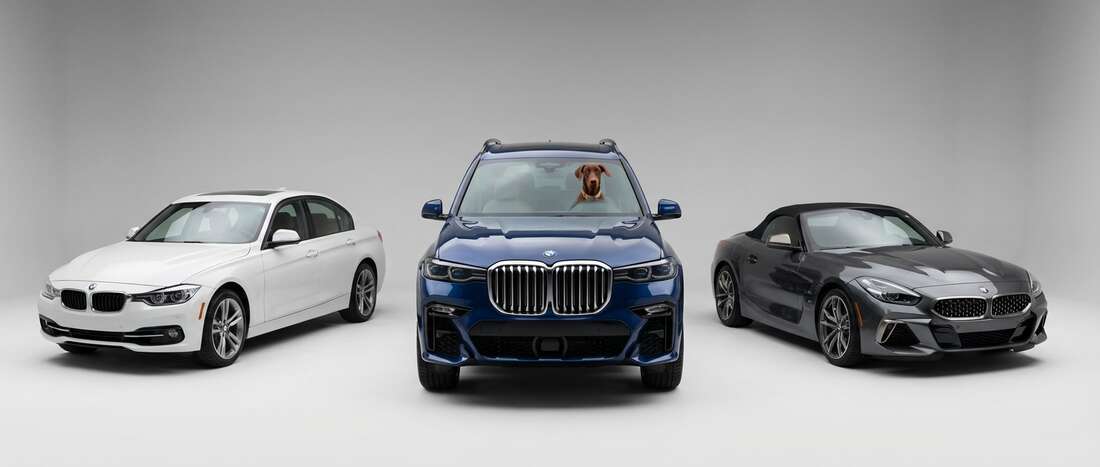
1971 BMW Touch Up Paint (14 OEM Colors)
Search for your color
-

Malaga Red
BMWMalaga Red (021)
🔥 Ordered 3 times recently -

Riviera Blue
BMWRiviera Blue (036)
🔥 Ordered 3 times recently -

Black
BMWBlack (086)
🔥 Ordered 1 times recently -

Colorado Yellow
BMWColorado Yellow (002)
🔥 Ordered 1 times recently -
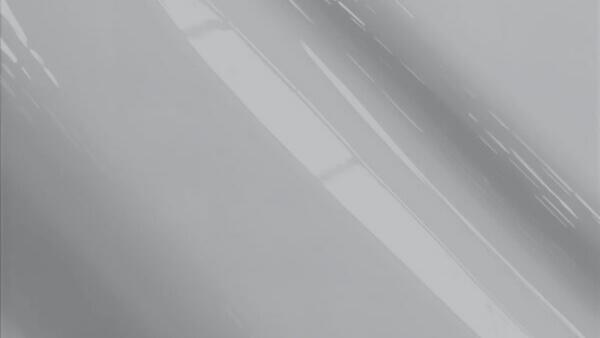
New Polaris Metallic
BMWNew Polaris Metallic (902/060)
🔥 Ordered 1 times recently -
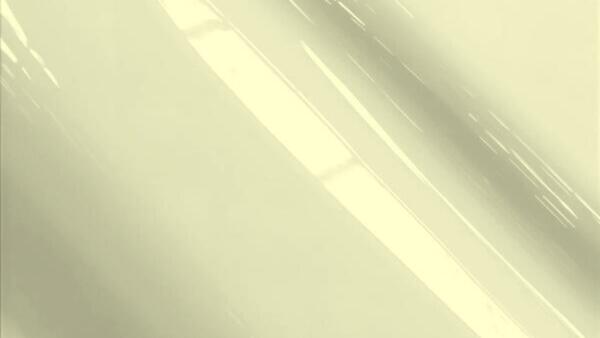
Sahara
BMWSahara (006)
🔥 Ordered 1 times recently -

Agave Green
BMWAgave Green (071)
-

Atlantic Blue
BMWAtlantic Blue (041)
-

Bristol Gray (Light)
BMWBristol Gray (Light) (058)
-

Caribbean Blue
BMWCaribbean Blue (502)
-
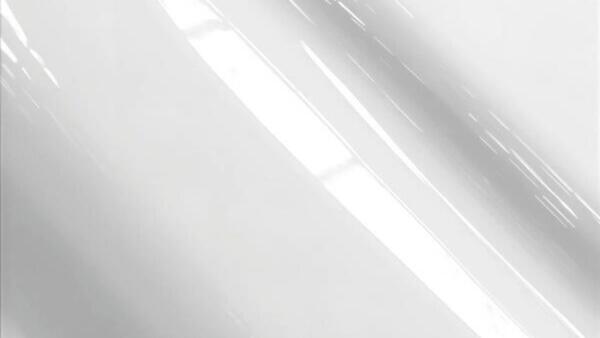
Chamonix White
BMWChamonix White (085)
-

Night Blue Metallic
BMWNight Blue Metallic (040)
-

Pacific Blue
BMWPacific Blue (500)
-

Tundra Green Metallic
BMWTundra Green Metallic (068)

For small chips & scratches
Customized Color Paint Pen
Repair tiny chips and scratches with precision. Perfect for small nicks from rocks or door dings, the fine tip applicator makes it easy for beginners to achieve a clean, factory-quality finish.

For Medium-sized Chips & Scratches
Customized Color Paint Bottle
Tackle medium-sized scratches and chips with our Customzied Color Paint Bottle. The built-in applicator brush provides smooth, controlled coverage, while the included basecoat delivers a perfect factory match in your custom paint color.

For larger areas & panel resprays
Customized Color Spray Can
Cover larger areas with a smooth, professional finish using ourcustomized color Spray Can. Designed for hoods, fenders, and larger scratches, this product provides consistent spray coverage and factory-matched color accuracy.

For large repairs & total resprays
Customized Color Professional Size Paint
When your repair job calls for more than a touch-up, step up to our professional-size automotive paints. Available in Pint, Quart, or Gallon sizes, these paints are ready-to-spray using an airless spray gun.

For small chips & scratches
Customized Color Tricoat Paint Pens
Repair tiny chips and scratches with precision. Perfect for small nicks from rocks or door dings, the fine tip applicator makes it easy for beginners to achieve a clean, factory-quality finish. Each order includes a basecoat and a midcoat pen.

For Medium-sized Chips & Scratches
Customized Color Tricoat Paint Bottles
Tackle medium-sized scratches and chips with our Customzied Color Paint Bottles. The built-in applicator brush provides smooth, controlled coverage, while the basecoat & midcoat deliver a perfect factory match in your custom paint color.

For larger areas & panel resprays
Customized Color Tricoat Spray Cans
Cover larger areas with a smooth, professional finish using our customized color basecoat & midcoat Spray Cans. Designed for hoods, fenders, and larger scratches, this product provides consistent spray coverage and factory-matched color accuracy.
For large repairs & total resprays
Customized Color Tricoat Professional Size Paint
When your repair job calls for more than a touch-up, step up to our professional-size automotive paints. Available in Pint, Quart, or Gallon sizes, these paints are ready-to-spray using an airless spray gun. Each order includes a basecoat & a midcoat paint.
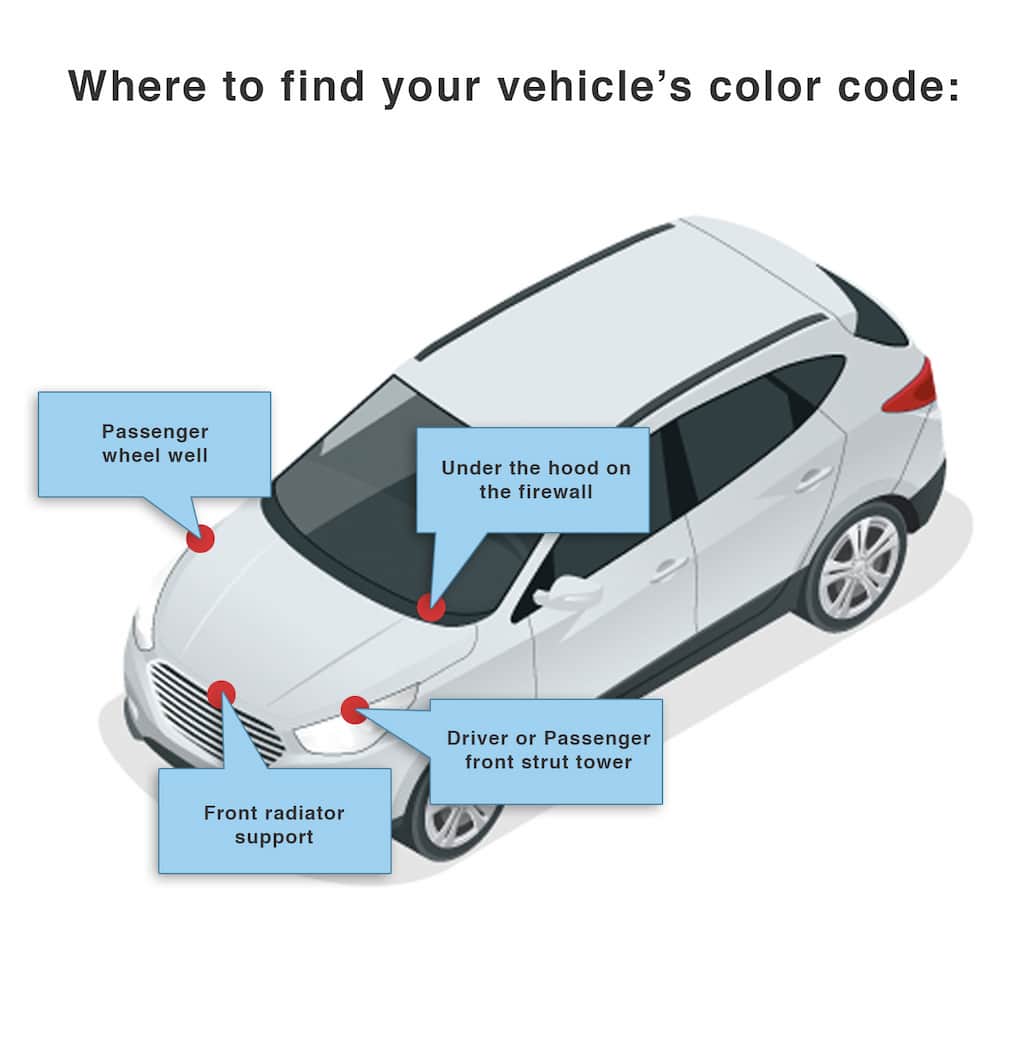
How to Find Your 1971 BMW's Color Code
BMW paint color codes appear in varied spots: on the firewall, on the radiator support, on the door jamb, or in the trunk. Location varies by year; a diagram under Finding Your Color Code shows where. Typical code format example: 300, which corresponds to: Alpine White III Clearcoat. Same Color Code, Different Name: the same paint can have different names across models (e.g., 300 also called White Clearcoat, Premium White Clearcoat). The code is key to correct paint.