


1997 Infiniti Touch Up Paint (16 OEM Colors)
Search for your color
-

Black Obsidian
InfinitiBlack Obsidian (KH3)
🔥 Ordered 4 times recently -

Ancient Bronze Pearl
InfinitiAncient Bronze Pearl (ES1)
-

Antique Pine Pearl
InfinitiAntique Pine Pearl (DR3)
-

Beige Pebble Metallic
InfinitiBeige Pebble Metallic (CG2)
-

Brown Pearl
InfinitiBrown Pearl (CP2)
-

Dark Blue Metallic
InfinitiDark Blue Metallic (BS3)
-

Dark Red Purple Metallic
InfinitiDark Red Purple Metallic (LP2)
-

Espresso Metallic
InfinitiEspresso Metallic (CR2)
-

Forest Green Pearl
InfinitiForest Green Pearl (DP0)
-

Ivory Quartz Tri-Coat Pearl
InfinitiIvory Quartz Tri-Coat Pearl (KH1)
-

Pewter Pearl Metallic
InfinitiPewter Pearl Metallic (KR5)
-

Purple Metallic
InfinitiPurple Metallic (LS6)
-

Silver Crystal Metallic
InfinitiSilver Crystal Metallic (KL0)
-

Tuscan Beige Metallic
InfinitiTuscan Beige Metallic (CR0)
-

White Pearl Tri-coat
InfinitiWhite Pearl Tri-coat (WK0)
-

White Platinum Tri-coat Pearl
InfinitiWhite Platinum Tri-coat Pearl (QN0)

For small chips & scratches
Customized Color Paint Pen
Repair tiny chips and scratches with precision. Perfect for small nicks from rocks or door dings, the fine tip applicator makes it easy for beginners to achieve a clean, factory-quality finish.

For Medium-sized Chips & Scratches
Customized Color Paint Bottle
Tackle medium-sized scratches and chips with our Customzied Color Paint Bottle. The built-in applicator brush provides smooth, controlled coverage, while the included basecoat delivers a perfect factory match in your custom paint color.

For larger areas & panel resprays
Customized Color Spray Can
Cover larger areas with a smooth, professional finish using ourcustomized color Spray Can. Designed for hoods, fenders, and larger scratches, this product provides consistent spray coverage and factory-matched color accuracy.

For large repairs & total resprays
Customized Color Professional Size Paint
When your repair job calls for more than a touch-up, step up to our professional-size automotive paints. Available in Pint, Quart, or Gallon sizes, these paints are ready-to-spray using an airless spray gun.

For small chips & scratches
Customized Color Tricoat Paint Pens
Repair tiny chips and scratches with precision. Perfect for small nicks from rocks or door dings, the fine tip applicator makes it easy for beginners to achieve a clean, factory-quality finish. Each order includes a basecoat and a midcoat pen.

For Medium-sized Chips & Scratches
Customized Color Tricoat Paint Bottles
Tackle medium-sized scratches and chips with our Customzied Color Paint Bottles. The built-in applicator brush provides smooth, controlled coverage, while the basecoat & midcoat deliver a perfect factory match in your custom paint color.

For larger areas & panel resprays
Customized Color Tricoat Spray Cans
Cover larger areas with a smooth, professional finish using our customized color basecoat & midcoat Spray Cans. Designed for hoods, fenders, and larger scratches, this product provides consistent spray coverage and factory-matched color accuracy.
For large repairs & total resprays
Customized Color Tricoat Professional Size Paint
When your repair job calls for more than a touch-up, step up to our professional-size automotive paints. Available in Pint, Quart, or Gallon sizes, these paints are ready-to-spray using an airless spray gun. Each order includes a basecoat & a midcoat paint.
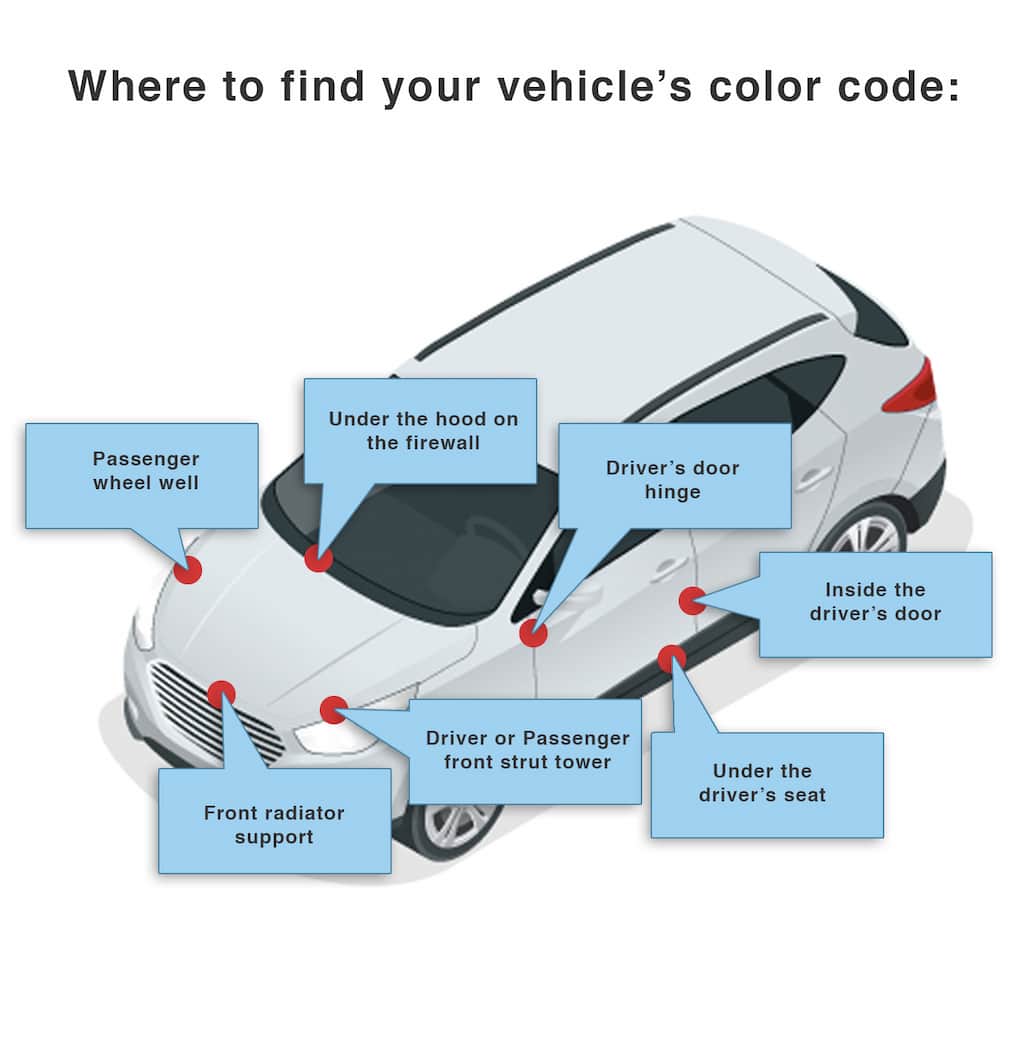
How to Find Your 1997 Infiniti's Color Code
Infiniti paint color codes are always on the drivers door jamb; some require getting pretty low on the drivers door jamb to read, but the code is easy to read. Typical format: AX6. AX6 corresponds to Redline Clearcoat. Same Color Code, Different Name: Infiniti uses the exact same color across many models with different names, so the color code is important. For example, AX6 above we call Redline Clearcoat; it could also be called Red Clearcoat, High Performance Clearcoat, etc.