


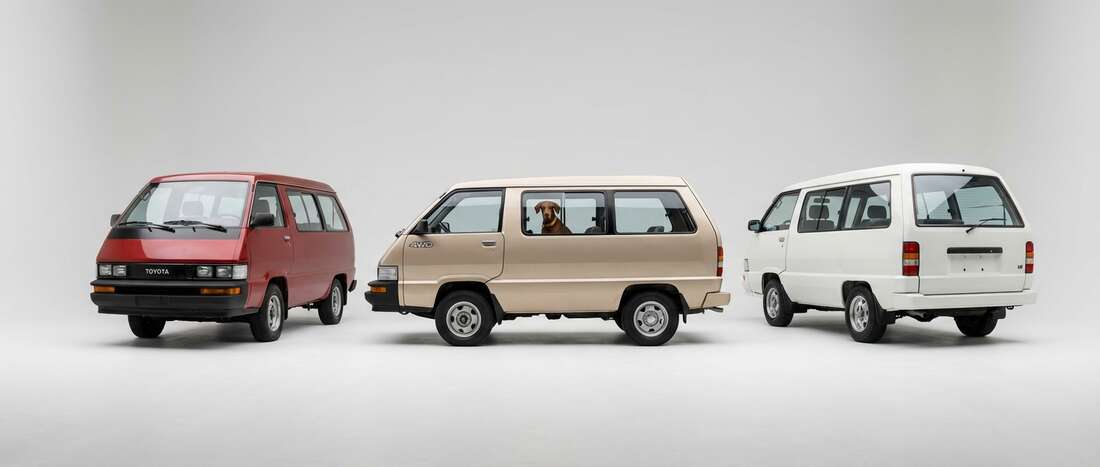
Toyota Vanwagon Touch Up Paint (29 OEM Colors)
Search for your Vanwagon's color
-

White
ToyotaWhite (033)
🔥 Ordered 7 times recently -

White
ToyotaWhite (045)
🔥 Ordered 5 times recently -

Dark Blue Metallic
ToyotaDark Blue Metallic (8D7)
🔥 Ordered 2 times recently -

Red Pearl
ToyotaRed Pearl (3H4)
🔥 Ordered 2 times recently -

Garnet Red Metallic
ToyotaGarnet Red Metallic (3E4)
🔥 Ordered 1 times recently -

Gray Metallic
ToyotaGray Metallic (155)
🔥 Ordered 1 times recently -

Light Blue Metallic
ToyotaLight Blue Metallic (8D8)
🔥 Ordered 1 times recently -

Super White
ToyotaSuper White (043)
🔥 Ordered 1 times recently -

Beige Metallic
ToyotaBeige Metallic (4C5)
-

Beige Metallic
ToyotaBeige Metallic (4D2)
-

Beige Metallic
ToyotaBeige Metallic (4K5)
-

Blue Metallic
ToyotaBlue Metallic (899)
-

Blue Metallic
ToyotaBlue Metallic (8A9)
-

Blue Metallic
ToyotaBlue Metallic (8D4)
-

Creme
ToyotaCreme (557)
-

Dark Blue Metallic
ToyotaDark Blue Metallic (8B5)
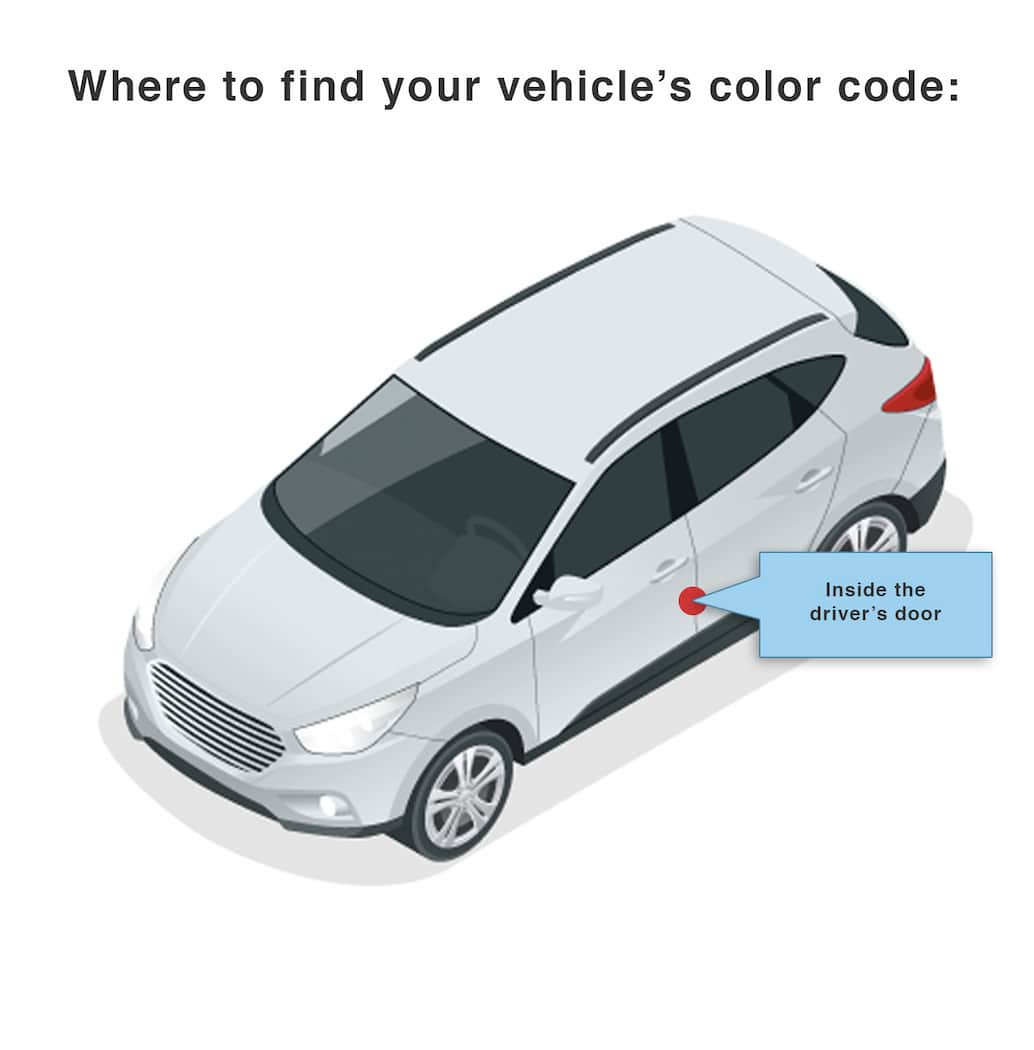
How to Find Your Toyota Vanwagon's Color Code
On all Toyota models, the color ID plate is on the drivers door jamb. It shows the letters C/TR and then the paint code. Example: C/TR 3P1 FA09. The color code is 3P1; FA09 is not part of the color code and is an interior option code. For example, 3P1 is Impulse Red Metallic Clearcoat; names may vary like Red Metallic Clearcoat or Wine Metallic Clearcoat. The color code can also be obtained from a dealer using the VIN.